
 admin
Finding hair conditioning tips that work can feel harder than it should. Shelves are full of bottles that promise softness and shine, yet many people still deal with dry ends, tangles, and hair that feels rough a day after washing. The good news is that softer, smoother hair usually comes down to a few simple habits, not expensive products. In this guide, you will learn how to condition your hair the right way, how to pick a conditioner for your hair type, and which small everyday changes make the biggest difference. These practical hair conditioning tips will help hair of most types stay soft, smooth, and easier to manage. For more gentle hair advice, browse our Hair Care guides.
Why Conditioning Matters
Every time you wash your hair, shampoo lifts away oil, dirt, and product buildup. That is its job, but it also leaves the hair shaft more open and likely to lose moisture. Conditioner helps close that gap, coating each strand with a light layer of moisturizing ingredients that smooth the outer cuticle, reduce friction between strands, and help hair hold on to water. The result is hair that tangles less, breaks less easily, and looks shinier. Skipping conditioner, even now and then, can leave hair dry and rough, especially if you wash often or use hot styling tools. A good conditioner does not change your hair overnight, but used regularly, it protects the lengths and ends from the daily wear that makes hair look dull and feel straw-like.
How to Condition Your Hair the Right Way
Technique matters as much as the product you choose. A few small changes to how you apply conditioner can make a real difference.
Start with clean, damp hair
After shampooing, gently squeeze out excess water before reaching for the conditioner. Dripping wet hair dilutes the product, so less of it stays on your strands. You do not need to towel-dry your hair completely; just press it lightly so it is damp rather than soaked.
Focus on the lengths and ends
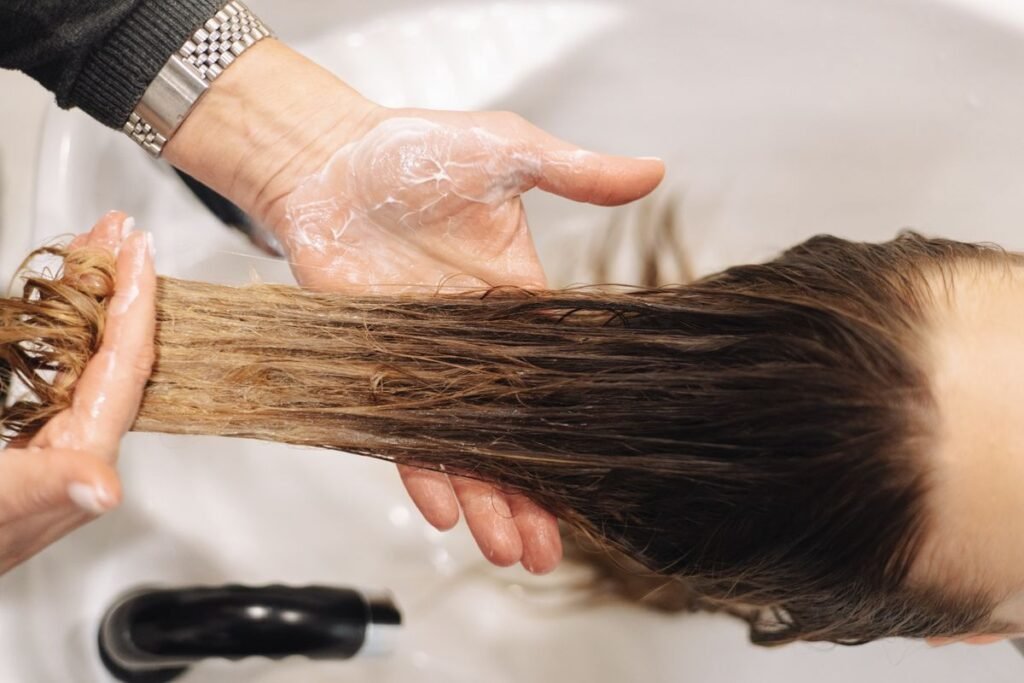
Apply conditioner from the mid-lengths to the ends, where hair is oldest and driest. Your roots usually get enough natural oil on their own, and conditioner on the scalp can leave hair looking flat or greasy. Use a wide-tooth comb or your fingers to spread the product evenly, working it through tangles gently instead of pulling at them.
Leave it on long enough
Most conditioners need at least two to three minutes to work. That is enough time for the moisturizing ingredients to coat the hair shaft. If your hair is very dry, you can leave it on a little longer, but there is no need to wait half an hour for a regular rinse-out conditioner. Use the time to wash your body or shave, then rinse.
Rinse with cool or lukewarm water
Hot water can strip moisture from your hair, so finish with lukewarm or cool water. A cooler rinse helps the cuticle lie flat, which makes hair look smooth and shiny. You do not need ice-cold water, just cooler than the water you used to wash.
Choosing the Right Conditioner for Your Hair Type
Not every conditioner suits every head of hair. If your hair is fine or thin, a lightweight, volumizing formula will moisturize without weighing it down. Thick or coarse hair usually benefits from a richer, creamier conditioner. Curly hair often needs extra moisture, so look for formulas made for curls that help define the pattern without stiffness. Color-treated hair does best with a conditioner made for color-treated hair, since it is designed to be gentler and help color last longer. If you are unsure where to start, a simple moisturizing conditioner suits most hair types.

Everyday Hair Conditioning Tips That Make a Difference
Beyond wash day, small daily habits help conditioner do its job better.
- Wash less often when you can. Washing every day can strip natural oils, and many people find their hair stays softer when they wash every two or three days.
- Use a leave-in conditioner on the ends. A small amount on damp ends between washes adds moisture and makes detangling easier.
- Protect your hair from heat. Let your hair air-dry when possible, and keep hot tools on a moderate setting.
- Be gentle when your hair is wet. Wet hair stretches more easily, so pat it dry with a soft towel instead of rubbing.
- Sleep on a smooth pillowcase. Cotton can create friction overnight, while silk or satin lets hair glide and can mean fewer tangles in the morning.
- Trim regularly. Even the best conditioner cannot fix frayed ends, and regular trims keep the ends looking neat.
If frizz is your main concern, our frizzy hair tips offer more simple ways to smooth your hair between washes.
Common Conditioning Mistakes to Avoid
Using too much product is a common mistake. A coin-sized amount is usually enough for medium-length hair, and more can leave buildup that makes hair look dull. Another mistake is applying conditioner to the scalp, which can weigh hair down. Skipping conditioner because your hair is oily is also a mistake, since the ends still need moisture, so apply it only to the lengths. Finally, do not expect one product to solve everything. If your hair still feels dry after a few weeks, the formula may not suit your hair type, and trying a different one is worth it.
A Simple Weekly Routine to Try
Try this routine: wash and condition two or three times a week, use a leave-in conditioner on the ends after every wash, and add a deeper conditioning treatment once a week. On non-wash days, refresh the ends with a tiny amount of leave-in conditioner instead of washing again. Keep heat styling to a minimum, and trim your ends every eight to twelve weeks, which also supports split ends prevention.
Conclusion
Softer, smoother hair is mostly about consistency. Choose a conditioner that fits your hair type, apply it to the lengths and ends, give it a few minutes to work, and be gentle with your hair between washes. You do not need a shelf full of products or a complicated routine, just a few good habits, repeated week after week. Start with one or two tips above, see how your hair responds, and build from there. RoseLuxe shares simple, practical hair care ideas, and you can read more about us here.
This article shares general beauty information only and is not medical advice. Learn more on our disclaimer page. If you have persistent scalp or skin problems, please see a dermatologist.


[…] to reduce frizz. If your hair is very dry, a weekly deep conditioning treatment can help too. Our hair conditioning tips explain how to get the most from your […]
[…] oil to the tips between washes. Moisturized ends are more flexible and less likely to split. Our hair conditioning tips explain how to condition the lengths and ends the right […]